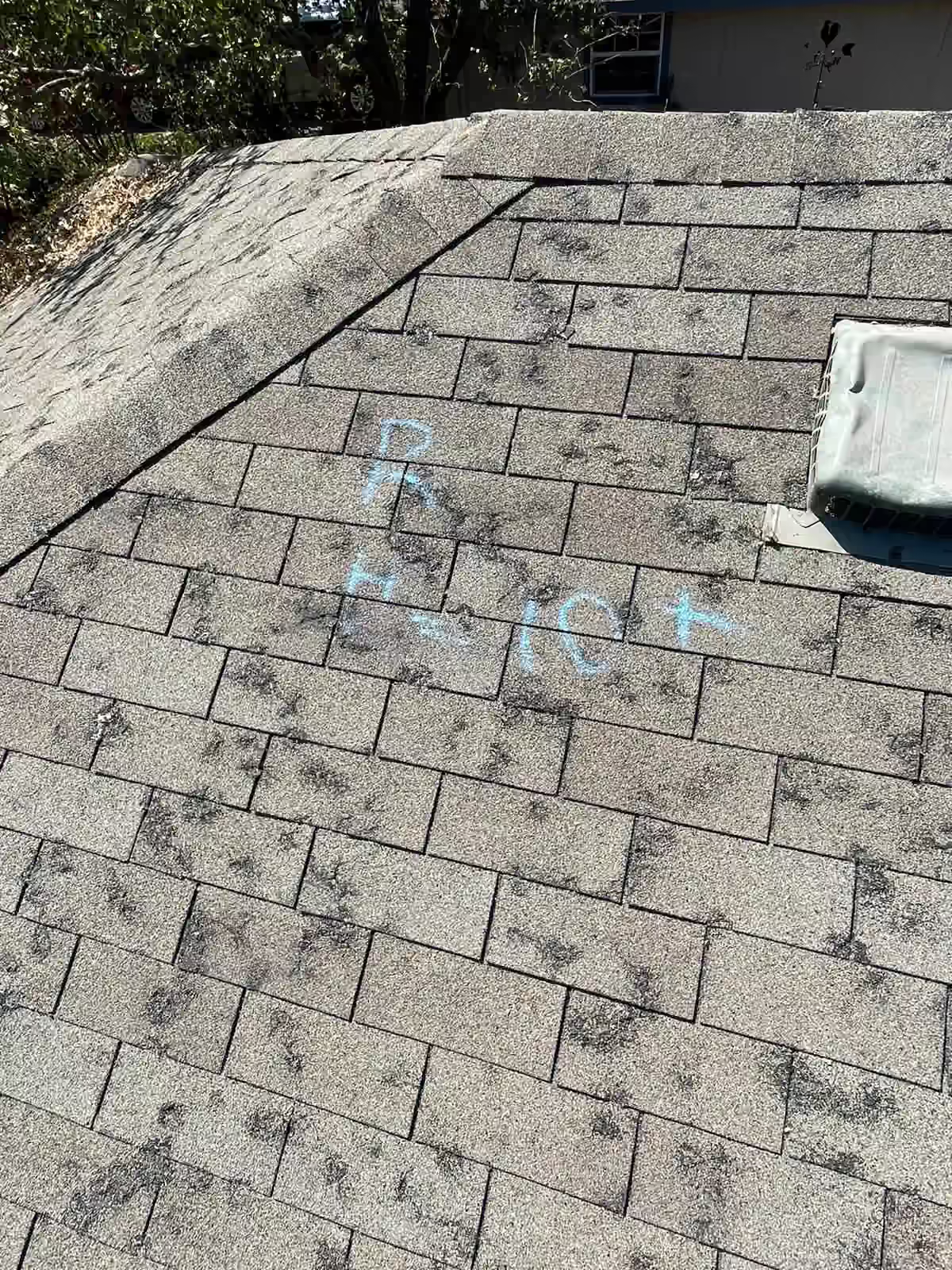
Disputed Hail Damage: How to Organize Your Roof Evidence
When an insurer and a contractor disagree about hail damage, another broad statement about the storm usually adds little. A useful inspection record identifies the roof area, shows the condition and explains the finding.
This guide focuses on the physical documentation. If you need to review the denial letter or decide where to raise a coverage dispute, start with what to do after a denied roof claim.
Build a Dated Record
Keep the reported storm date, the insurer’s letters, the roof installation information you have and any earlier repair records. Separate facts you can document from estimates or recollections.
Older roof photos may help establish whether a condition was already present. Weather reports can provide context, but they do not establish the damage to an individual roof by themselves.
Make the Photographs Findable
An isolated close-up can be difficult to interpret. Ask the inspector to include a wider view showing where the detail sits, followed by the closer image. Label the slope, component or location consistently across the photos and written report.
For each item, record the location, observed condition, matching photo number and proposed work. Keep the original files as well as the report. That makes it easier to find the same detail when someone asks a follow-up question.
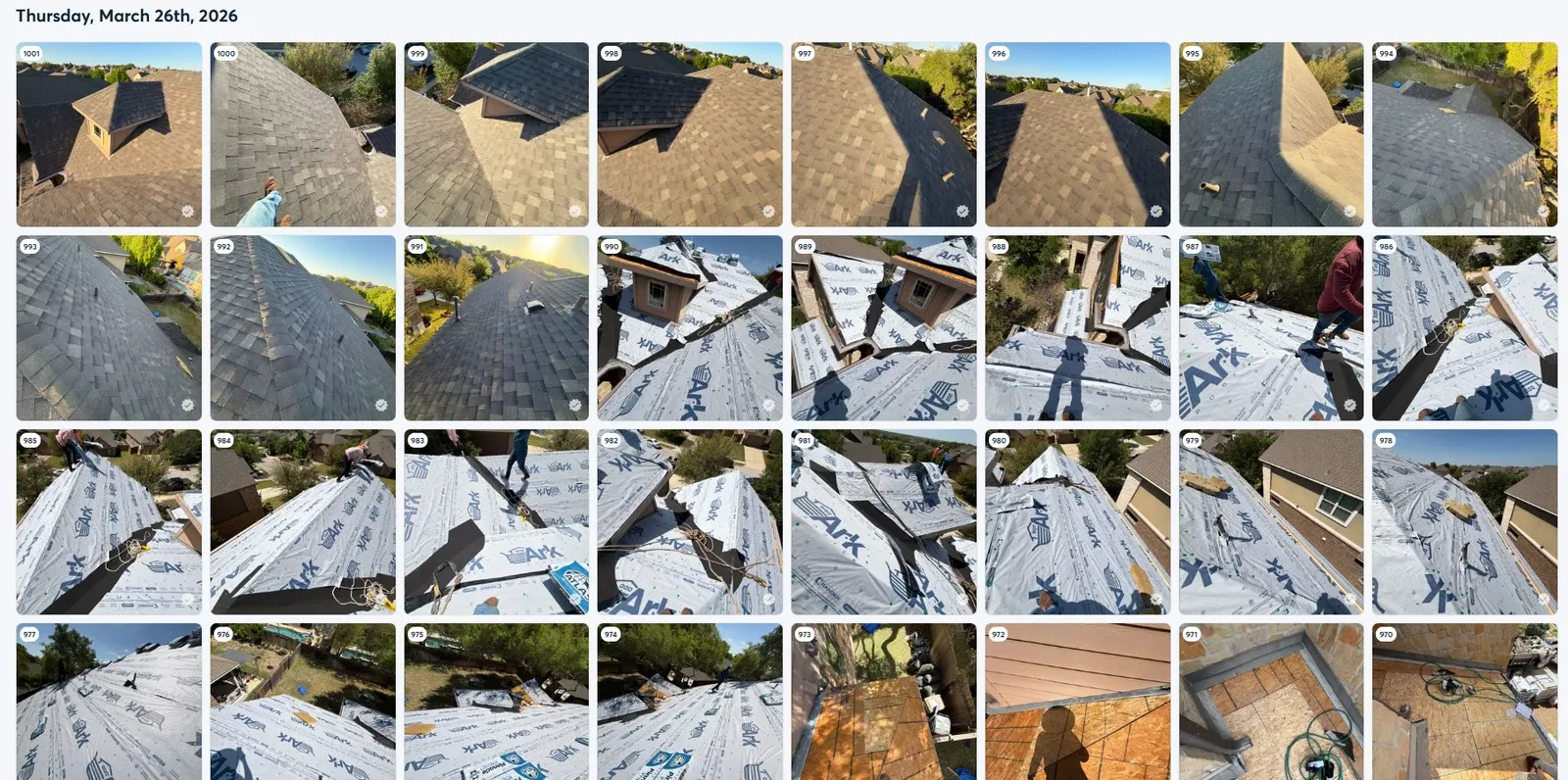
A roof photo log can preserve details from different stages of a project. Label images so the reader can match them to the written record.
Ask What Distinguishes Hail From Other Conditions
Granule loss, worn surfaces and marks on roof components can have more than one explanation. The inspector should describe the evidence supporting the assessment and acknowledge what cannot be determined from a photograph.
Our hail-damage guide explains why the roof covering and surrounding details need to be evaluated together. Avoid altering a mark, striking a roof surface or removing material yourself to make a photograph look clearer.
Connect the Finding to the Repair Scope
Ask which items need work and why. If replacement is recommended, request an explanation of why a localized repair would leave the problem unresolved. The estimate should identify the materials and areas involved.
Keep coverage questions separate from the physical scope. A contractor can explain the repair it proposes, but the insurer evaluates payment under the policy. TDI describes the limits on a contractor acting as an adjuster.
Ark’s hail inspections provide documentation you can review. Share the existing reports and photographs when you book so the consultant understands which roof conditions need a closer look.
← All Gazette posts