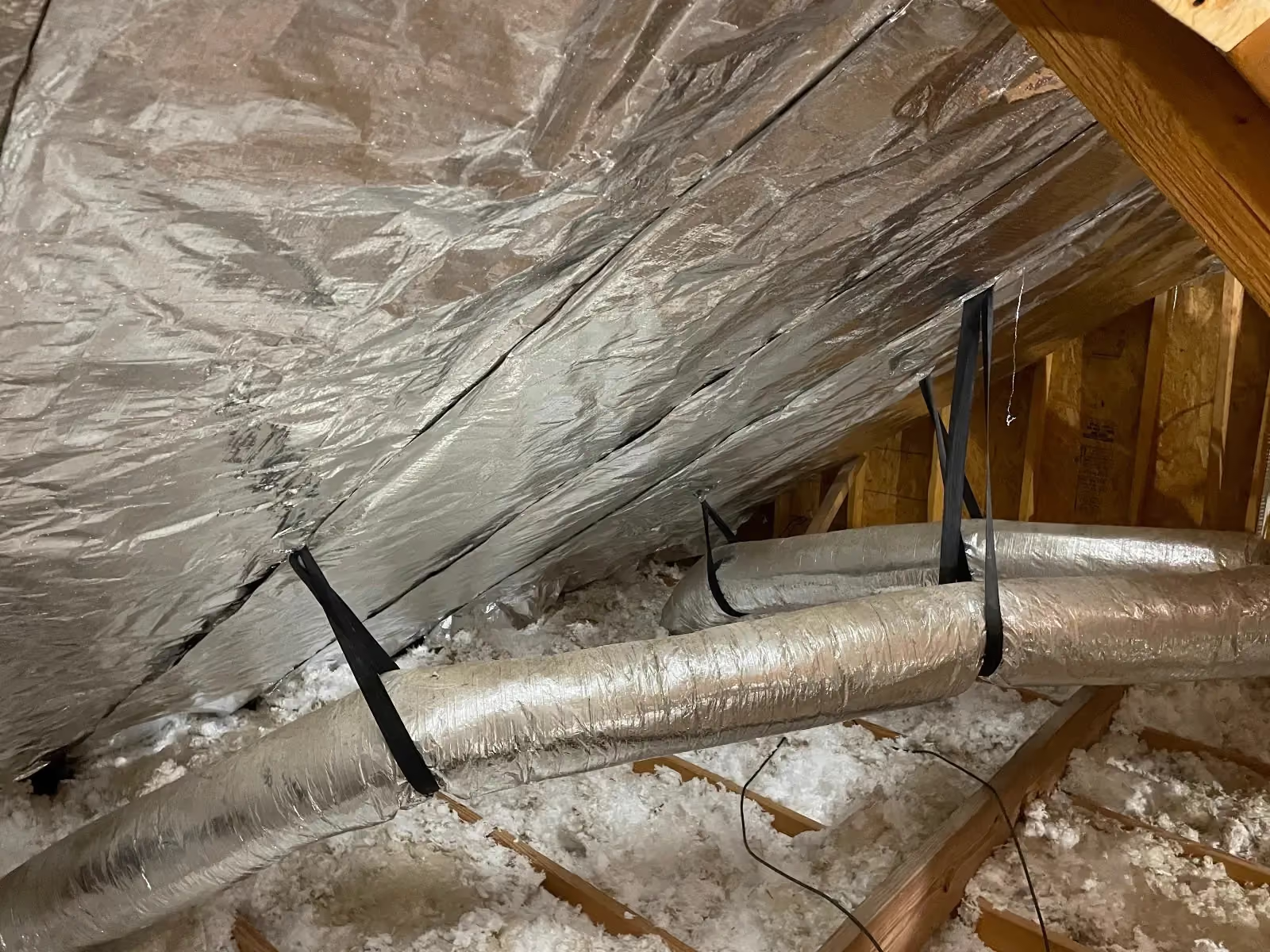
What a Radiant Barrier Can Do in a Texas Attic
A radiant barrier can reduce part of the heat transfer from a sun-heated roof into the attic. Whether it is a useful upgrade for your house depends on the attic’s construction, insulation, air leaks and the location of the ductwork.
Start with those conditions before treating a reflection percentage as an estimate of what you will save on electricity.
What the Reflective Surface Does
Radiant barriers use a reflective surface facing an air space to reduce radiant heat transfer. That is one way heat moves through a home. Insulation, air sealing and ventilation each address other parts of the problem.
A claim that a surface reflects a high percentage of radiant heat does not mean the entire house will use that much less cooling energy. PNNL’s radiant-barrier guidance distinguishes the product’s physical properties from whole-home energy savings.
Installation Location Matters
The reflective face needs the required adjacent air space. Product directions determine placement, orientation and attachment. In a vented attic, the installation also needs to preserve the intended airflow.
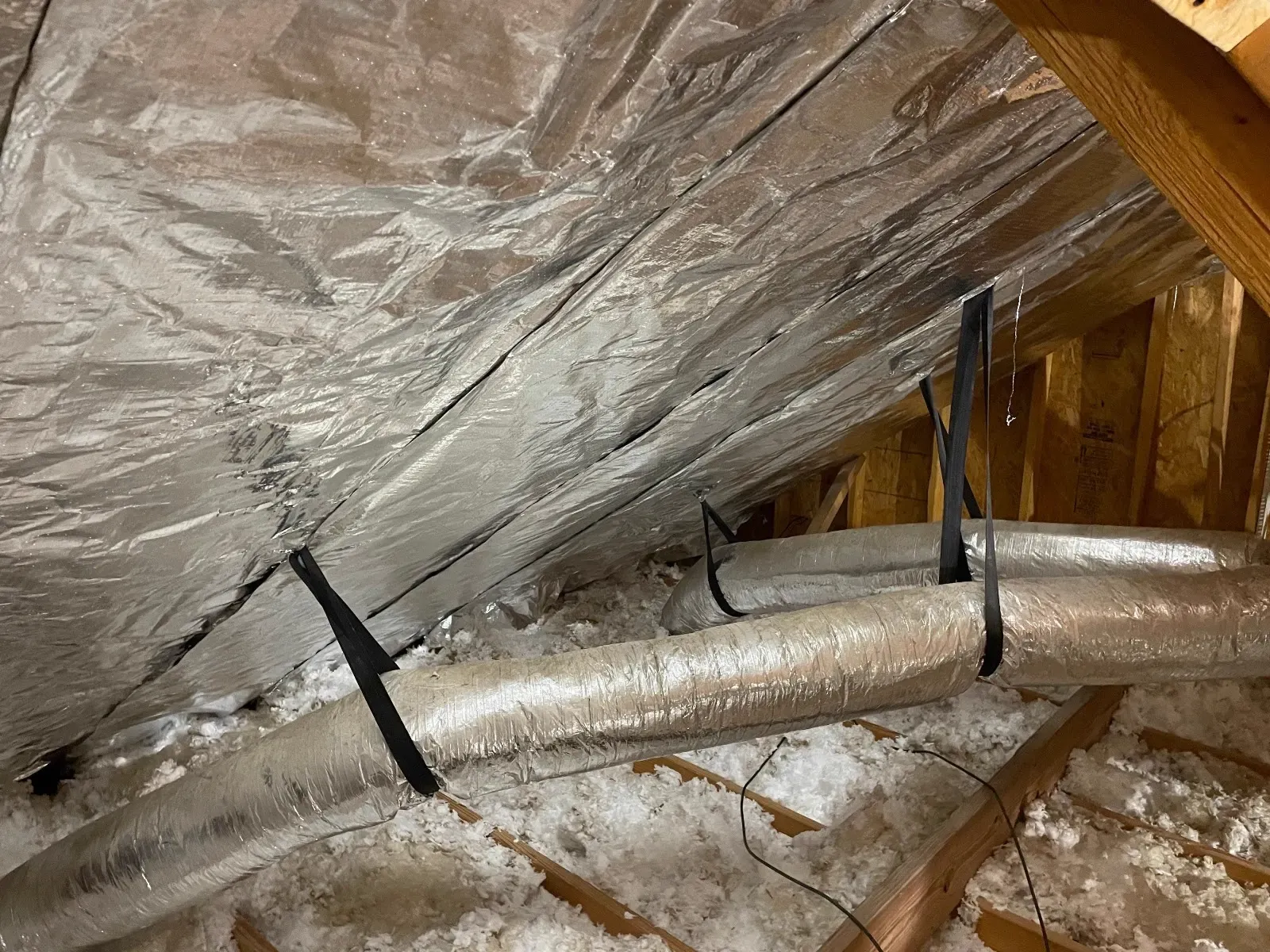
Reflective material above attic insulation and ducts. Installation details depend on the roof assembly.
Dust accumulation can reduce the effectiveness of an exposed reflective surface. Laying sheet foil across attic-floor insulation also raises different concerns from an installation near the roof. Ask the installer to explain the proposed location and its compatibility with the assembly.
Address Existing Problems First
Active leaks, wet insulation, blocked intake and disconnected ducts need their own solutions. A radiant barrier will not repair those conditions.
For a house that remains uncomfortable while the air conditioner runs, ask whether ceiling air leaks and insulation coverage have been evaluated. Those findings may change which improvement deserves the budget first. An intentionally unvented attic needs a design-specific assessment rather than a generic ventilation prescription.
Ask How the Savings Were Estimated
A useful estimate explains the home’s starting condition and the assumptions behind the forecast. Existing insulation, shade, roof exposure, duct location, thermostat settings and energy prices can all affect the result.
Avoid treating one attic-temperature reading as a complete before-and-after comparison. Weather, time of day and operating conditions need to be considered. The question is how the improvement affects the home over comparable conditions.
If a product is proposed near the roof deck, also ask about compatibility with the existing roof assembly and relevant warranties. Get the applicable manufacturer requirements in writing.
Ark offers radiant-barrier work as part of its attic services. A consultation can establish the current condition and whether that work belongs in your plan. For a broader explanation of the roof and attic, see Luke’s ventilation guide.
← All Gazette posts