
Signs Your Roof's Exhaust Vents Are Clogged or Failing
A sewer smell in the hallway or a brown ring on the ceiling often starts at one of the pipes on your roof.
Most Central Texas homeowners look at their roof after a hailstorm and forget about it the rest of the year. The vents and pipes sticking out of it get even less attention, until a bathroom smells like sewer gas or a stain shows up under the attic.
Those openings do two jobs. Plumbing vents carry sewer gas out of the house and let your drains breathe. Attic exhaust vents let hot, damp air out of the attic. When one clogs, cracks or loses its cap, the symptoms show up indoors, and they are easy to blame on something else.
What the Vents on Your Roof Do
- Plumbing vent stacks are the narrow pipes, usually PVC, that come up through the roof from your drain lines. They let sewer gas escape above the roofline and let air into the drains so water flows without pulling the water out of your sink and tub traps. A rubber or metal boot seals the roof around each pipe.
- Attic exhaust vents sit high on the roof: box vents, turbines, a ridge vent or a powered or solar fan. They work with the intake vents in your soffits. Air comes in low, warms up and leaves high.
Leaves, bird and wasp nests, rust and storm damage can block or break either kind.
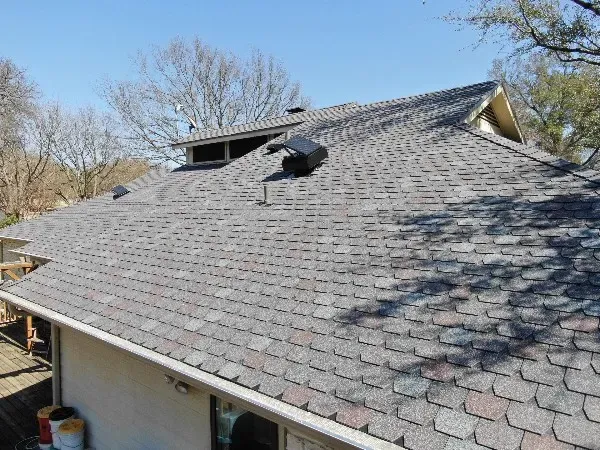
5 Warning Signs of a Clogged or Failing Vent
- A sewer or rotten-egg smell. A blocked plumbing vent can let draining water siphon the water out of your P-traps. That standing water is the only thing keeping sewer gas out of the room, so the smell tends to come and go with water use.
- Gurgling drains and slow sinks. When the vent is fully blocked, air cannot get into the drain line. Water fights its way down, sinks drain slowly, and toilets or tubs gurgle after you flush or pull the plug. Several fixtures doing it at once points to the main stack.
- A hot, musty attic. Blocked exhaust traps heat and moisture. Upstairs rooms stay warm, the AC runs longer, and damp insulation starts to smell. Intake is the usual culprit, with insulation pushed against the soffit vents, but nests in box vents and exhaust vents shingled over during an old reroof cause it too.
- A ceiling stain under a vent pipe. A cracked boot or loose flashing lets rain run down the outside of the pipe. The stain often shows up below or near the vent and gets worse after heavy rain. Water can travel along framing before it drips, though, so the stain tells you where the water landed, and the roof tells you where it got in.
- Scratching overhead. Broken vent caps and torn screens open straight into a warm attic. Squirrels, rats and birds find them fast. Movement above the ceiling at dawn or dusk is the usual giveaway, and our animal and pest damage repair seals the openings once the animals are out.
Luke is a personable and honest professional. Every Ark Roofer service person that has visited our home has been courteous, forthright, and efficient, all at a high standard and fair price.
Jason came out and what a great experience. He was very personable and professional and gave me a great price. The work was done in two afternoons and Jason came back to review it.
Incredible roofing company that handles every project with professional expertise, superior products, and upgrades. This company makes sure you are aware of all your options every step of the way.
Common Vent Problems and How They Get Fixed
| Problem | Usual cause | What you notice | The fix |
|---|---|---|---|
| Blocked plumbing vent | Leaves, a nest or a stray ball in the open pipe | Gurgling drains, sewer smell | Clear the top of the stack, or a plumber snakes the line |
| Cracked boot or flashing | Sun-dried rubber, rusted metal flashing, hail | A stain near the vent pipe | Replace the boot and reseal the shingles around it |
| Blocked attic airflow | Insulation over soffit vents, nests, covered exhaust | Very hot attic, musty smell, higher bills | Clear intake and exhaust, then balance the two |
We handle the roof side of these problems: boots, flashing, vent caps, screens and attic exhaust. A clog deep in the drain line is plumbing work, and we will tell you when you need a plumber instead of us.
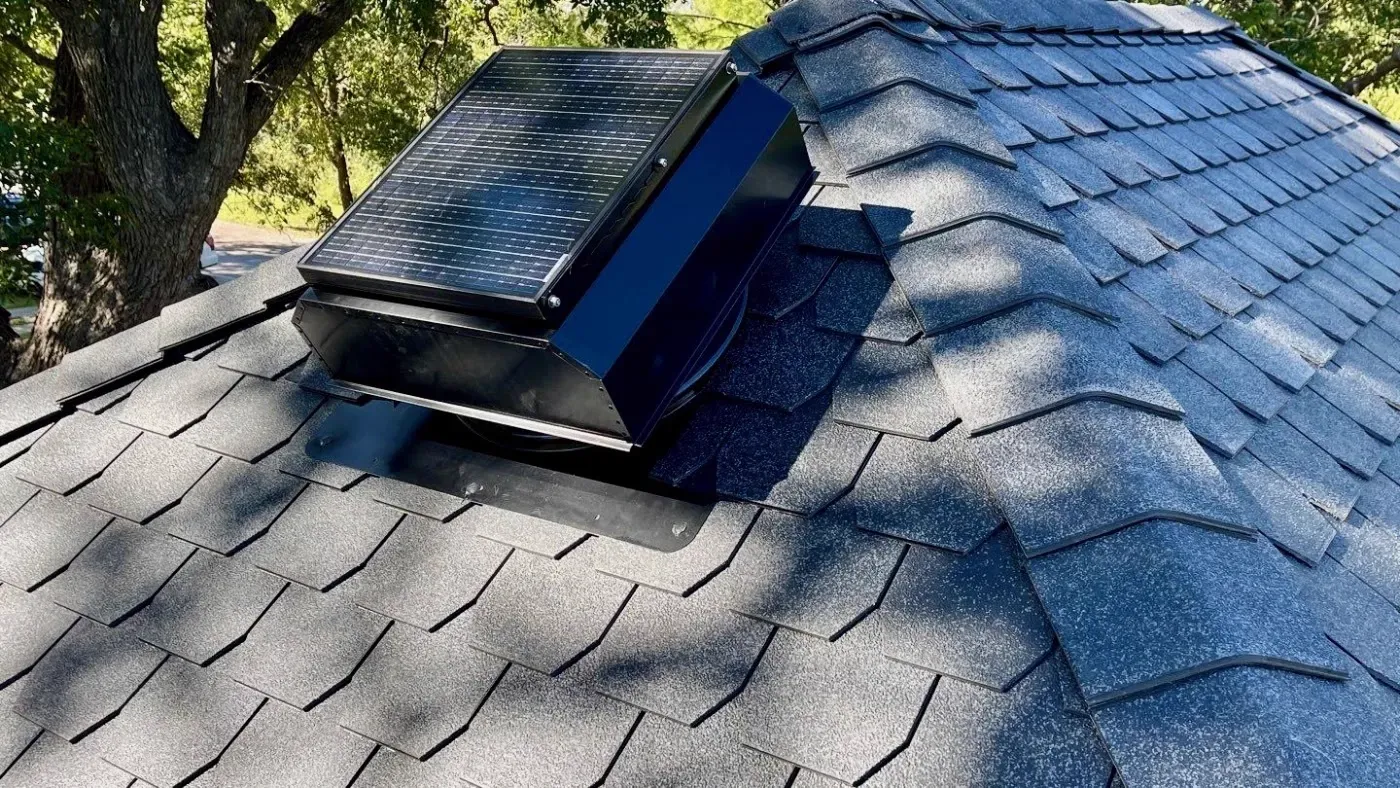
Get your roof vents checked
Every free ArkCertified inspection covers the pipe boots, vent caps and attic exhaust, with more than 100 photos and video sent to your phone. If a vent needs work, you will see the photo of it first.
Book a free inspectionExhaust Vent FAQs
Can I clear a clogged roof vent myself?
Why do rubber pipe boots crack in Texas?
How often should roof vents be checked?
Not sure which vent is behind the smell or the stain? Call 512-948-1638. For more on how attic air moves, read Luke’s attic ventilation walkthrough or see our exhaust ventilation page.