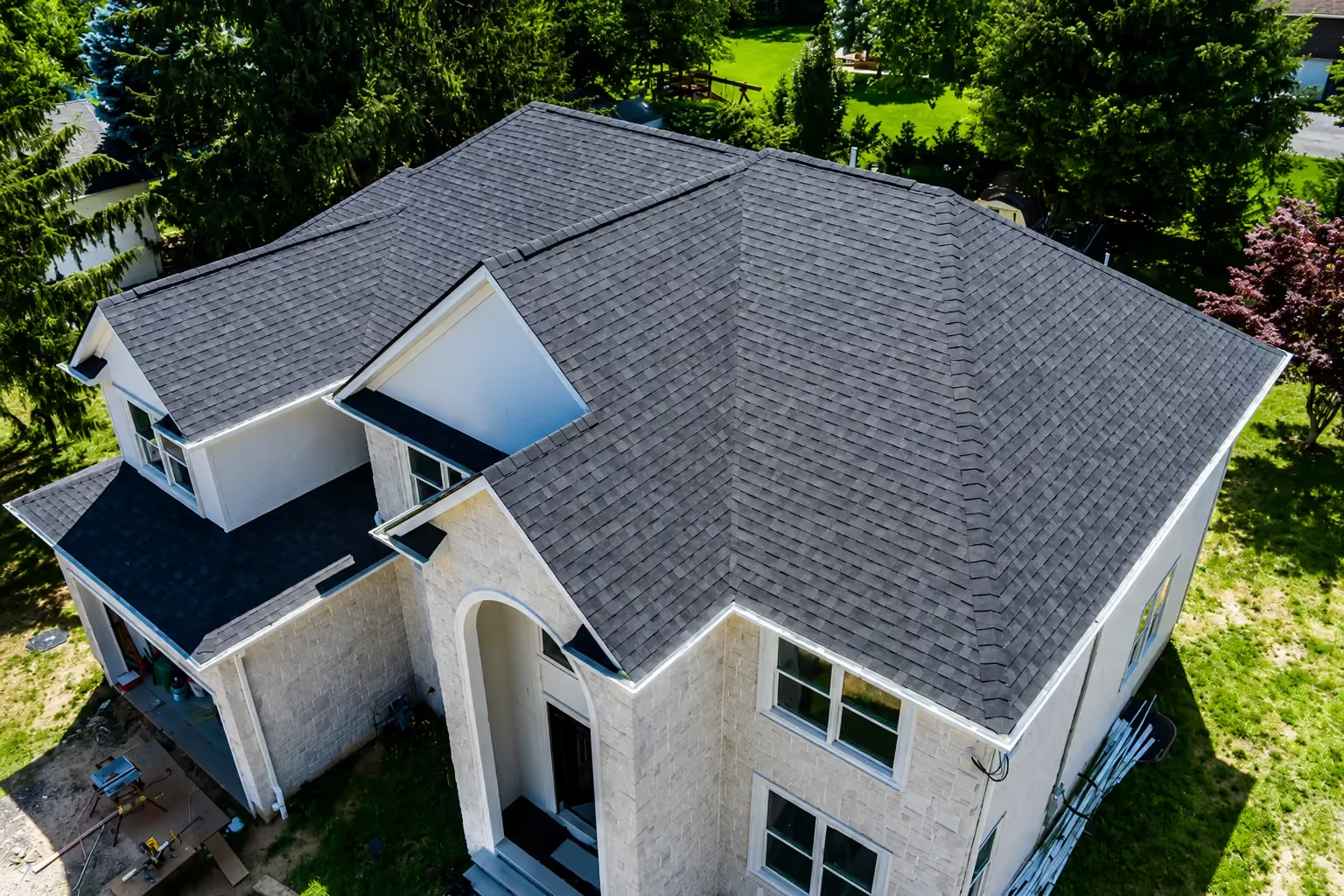
Can Proper Ventilation Actually Extend the Life of Your Asphalt Shingles?
Hail gets the blame for most worn-out roofs in Central Texas. Heat and moisture in the attic do their share too.
On a 100°F afternoon, a Central Texas attic often reaches 150°F to 165°F. That heat sits right under the roof deck the shingles are nailed to. When the attic can’t move air, moisture from showers, cooking and laundry collects there too.
Ventilation won’t make a 20-year shingle last 40 years. What it does is keep the deck dry and cooler, keep the shingle warranty in good standing, and take some load off your AC. And it is far cheaper to fix while the roof is still good.
How a Ventilated Attic Moves Air
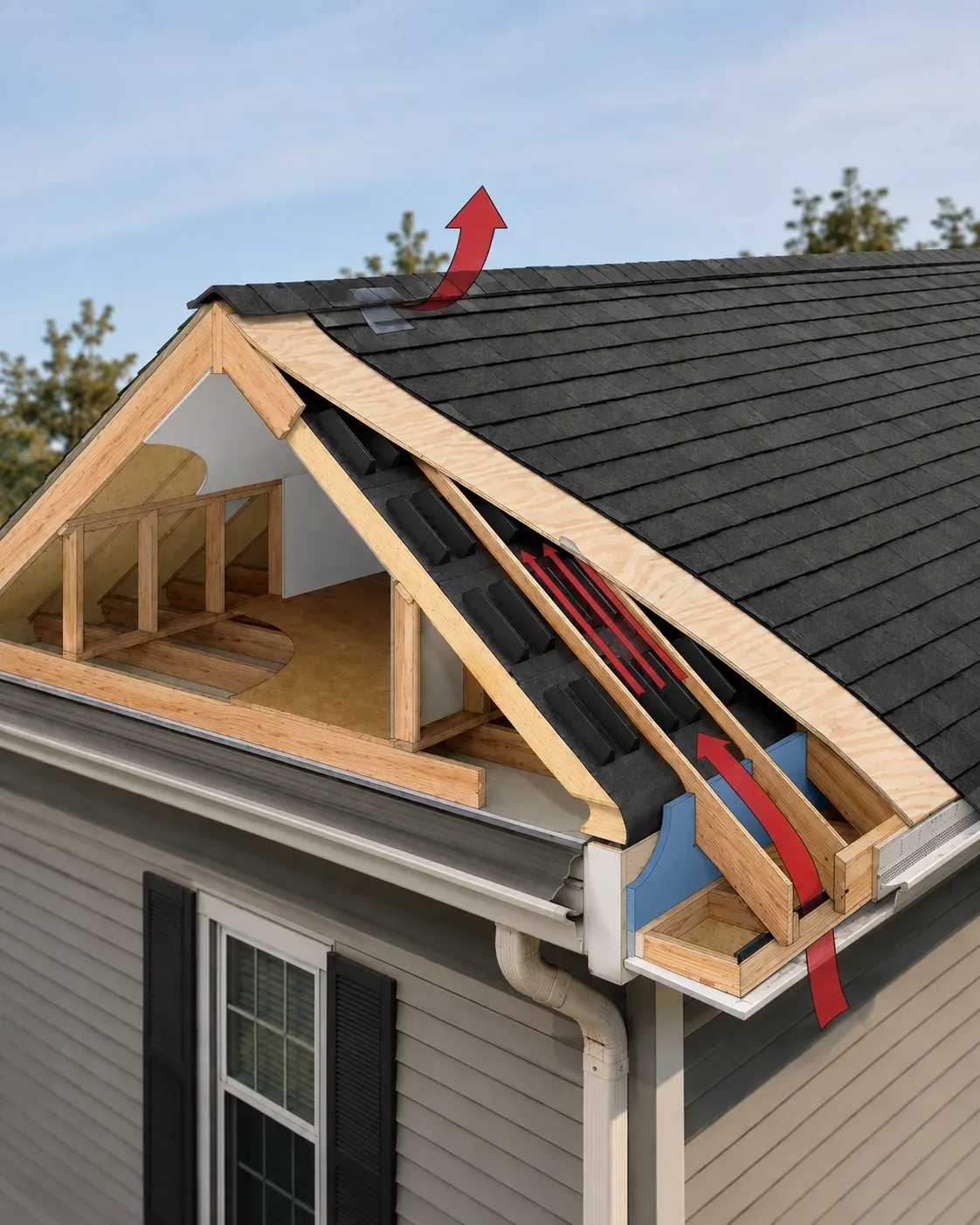
A vented attic works like a chimney. Two sets of openings do the work:
- Intake vents in the soffits along the eaves let cooler outside air in low.
- Exhaust vents near the peak (a ridge vent, box vents, turbines or a fan) let the warm, damp air out high.
High vents need low vents. Exhaust without enough intake stalls, and the most common reason is insulation blown over the soffit vents. Mismatched exhaust types on the same roof can also short-circuit the flow, so one vent feeds the one next to it and the rest of the attic sits still.
What Poor Ventilation Does to a Shingle Roof
- Wet decking. This is the big one. Warm, humid air that can’t leave the attic condenses on the underside of the roof deck. Over time the plywood or OSB softens, nails rust, and the shingles above lose their grip. Soft decking turns a simple shingle repair into a decking replacement.
- Extra heat on the shingles. Asphalt shingles already take full sun from above. A trapped, overheated attic adds heat from below. That speeds up drying, cracking and granule loss, although the sun and the shingle itself still decide most of the lifespan.
- Warranty trouble. Shingle makers publish ventilation requirements in their installation instructions, and manufacturer warranties can exclude damage caused by inadequate ventilation. If an early failure ends in a warranty claim, the attic will be part of the conversation. Read the warranty for your specific shingle.
- Higher cooling bills. Attic heat works its way down through the ceiling insulation and the ducts that run through the attic. Your AC pays for it every afternoon from May to September.
Luke is a personable and honest professional. Every Ark Roofer service person that has visited our home has been courteous, forthright, and efficient, all at a high standard and fair price.
Jason came out and what a great experience. He was very personable and professional and gave me a great price. The work was done in two afternoons and Jason came back to review it.
Incredible roofing company that handles every project with professional expertise, superior products, and upgrades. This company makes sure you are aware of all your options every step of the way.
Under-Ventilated vs. Properly Ventilated Attics
| Under-ventilated attic | Properly ventilated attic | |
|---|---|---|
| Summer attic heat | Heat builds through the afternoon and lingers into the night | Hot air leaves continuously, so the attic cools faster |
| Roof deck | Condensation, soft spots, rusted nails | Stays dry |
| Shingle wear | Faster drying, cracking and granule loss | Wear driven mostly by sun and storms |
| Warranty | Ventilation can become a reason to deny a claim | Meets the manufacturer’s installation requirements |
| Cooling | AC fights radiant heat from the ceiling | Less heat reaches the living space |
Not every attic should be vented. Some homes have spray foam under the roof deck and were designed as unvented attics. Adding vents to one of those can create a new moisture problem, so the fix starts with knowing which kind of attic you have. Our earlier post on attic heat and moisture covers how to tell.
Find out if your attic is cooking your shingles
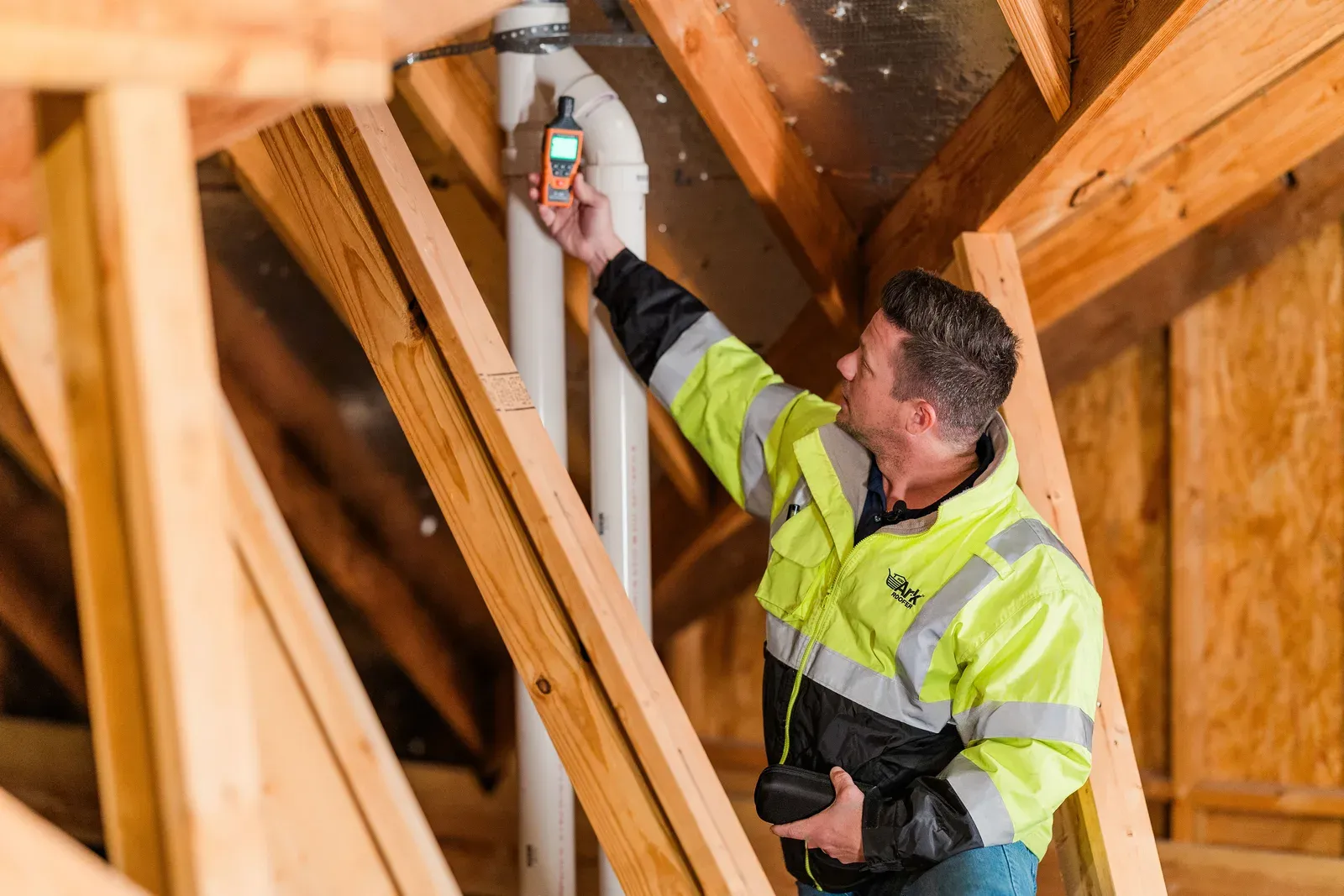
Our attic ventilation analysis checks your soffit intake, roof exhaust and attic conditions and shows you the findings in photos. If the airflow is out of balance, you will see where and what it takes to fix it.
Book an attic analysisAttic Ventilation FAQs
What is the 1/150 or 1/300 rule for attic ventilation?
Can a roof have too much ventilation?
Are ridge vents better than box vents?
Luke’s attic ventilation walkthrough goes further into intake, exhaust and attic fans. Or call 512-948-1638 and we will look at yours.